

The Science of Oil-Free Cooking
How to achieve rich caramelization, delicate crispiness, and deep savory flavor using heat, moisture, and pan thermodynamics instead of extracted liquid lipids.
📖 The Physics of Maillard Reaction Without Oil
Many home cooks believe that cooking oil is chemically required to brown food. In reality, the Maillard reaction—the chemical reaction between amino acids and reducing sugars that produces rich roasted aromas and deep golden-brown colors—is driven strictly by temperature (140°C to 165°C / 285°F to 330°F) and direct surface contact, not by lipids.
Extracted oils function primarily as a heat-transfer medium and lubricant. When cooking whole-food plant-based, we replace extracted oils with water-soluble moisture mediums (vegetable broth, water, vinegar, or natural vegetable juices) combined with proper thermal regulation.
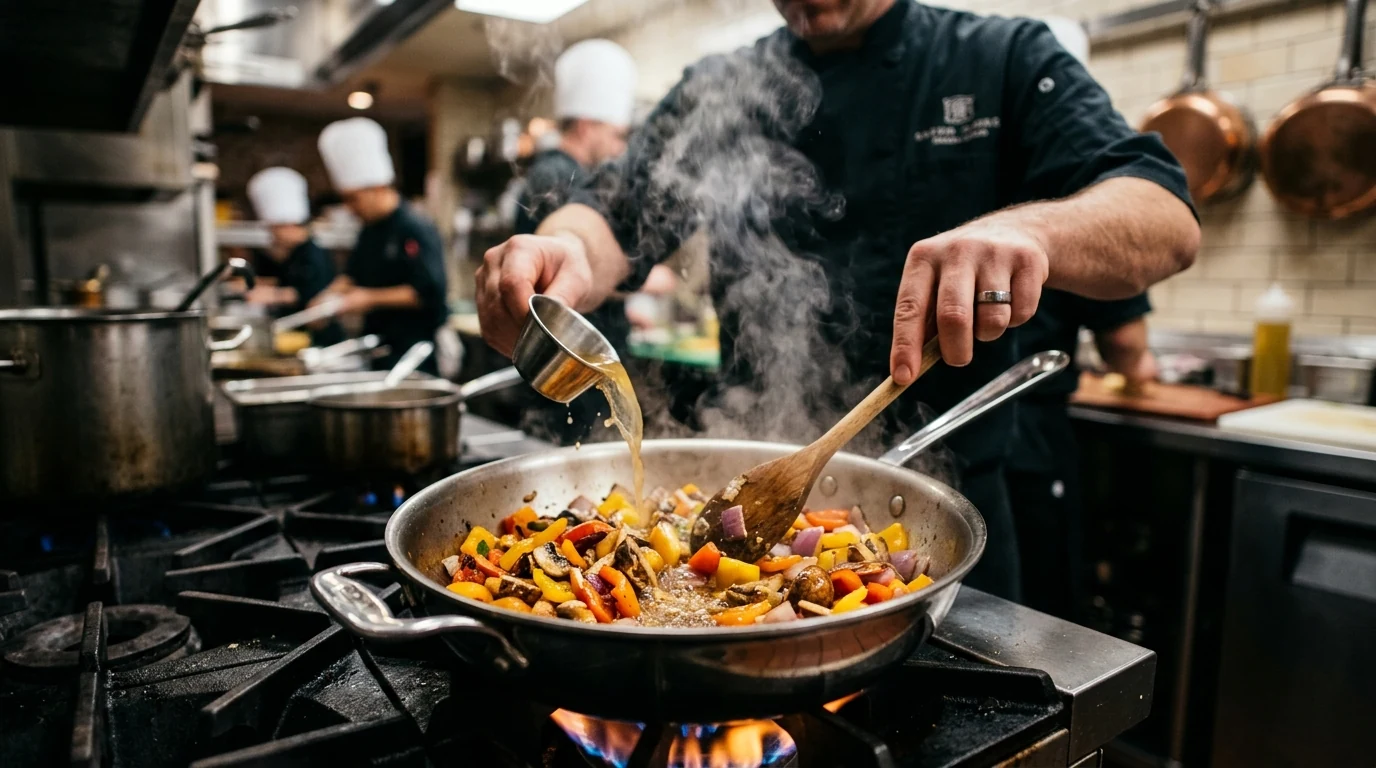
Heat a stainless steel or heavy ceramic pan over medium-high heat. When a drop of water dances on the surface (the Leidenfrost effect), add your onions, mushrooms, or garlic. Let them naturally release juices. When the fond (browned residue) begins forming on the pan, deglaze with 1 to 2 tablespoons of water or vegetable broth.
Add dense vegetables (broccoli, carrots, Brussels sprouts) to a hot pan with 3 tablespoons of water, cover with a tight lid for 3 minutes to steam through, then remove the lid to evaporate remaining moisture and allow direct pan contact for golden browning.
Toss root vegetables or tofu in spices, lemon juice, or a light aquafaba coating. Roast at 200°C (400°F) on silicone baking mats or unbleached parchment paper. The circulating dry convective air creates a crispy exterior while caramelizing natural sugars.
Interactive Cooking Method Selector
What ingredient are you preparing today? Select a food category to discover the exact optimal oil-free technique and temperature guide: