Iron Evidence Guide
Vital trace mineral serving as the central oxygen-binding prosthetic group in hemoglobin and myoglobin, driving cellular mitochondrial ATP production, electron cytochrome transport, and DNA synthesis.
Quick Scientific Facts: Iron
Key physiological targets, upper safety bounds, and bioavailability metrics.
Why Iron Matters
Non-Heme Iron (Fe²⁺/Fe³⁺) • Essential Trace Mineral
Non-heme iron (Fe³⁺) in whole plant foods is reduced to ferrous iron (Fe²⁺) by duodenal cytochrome b (Dcytb) and transported into enterocytes via DMT1 (Divalent Metal Transporter 1). Unlike heme iron, non-heme plant iron is regulated by systemic hepcidin levels, protecting against oxidative iron overload.
Consuming Vitamin C or organic fruit acids (citrus, bell peppers, berries) alongside non-heme plant iron converts insoluble ferric iron into soluble ferrous iron, multiplying intestinal iron uptake by up to 300%.
6-Stage Biological Journey: Iron
Interactive pathway mapping Iron ingestion, digestive release, membrane transport, and cellular bio-utilization.
Non-Heme Plant Ferric Matrix
Ferric iron (Fe³⁺) bound to plant ferritin and phytates in legumes, greens, & grains.
Oral Mastication & Salivary Solubilization
High Whole Food Retention
Gastric Pass-Through
Best 100% Whole Food Plant-Based Sources of Iron
Top nutrient-dense plant foods ranked by % Daily Value per standard serving.
Cooked Lentils →
Organic Extra Firm Tofu
Cooked Spinach →
Raw Pumpkin Seeds →
Black Beans →
Quinoa (Grain) →
Recommended Daily Allowance (RDA) & DRI Standards: Iron
Dietary Reference Intakes (DRI) across human life stages established by the National Academies of Sciences.
| Life Stage Bracket | Requirement Target | Type | Upper Limit (UL) | Visual Scale |
|---|---|---|---|---|
| Infants (7–12 months) | 11 mg / day | RDA | 40 mg / day | |
| Children (1–8 years) | 7 – 10 mg / day | RDA | 40 mg / day | |
| Adolescents (14–18 years) | 11 mg (M) / 15 mg (F) | RDA | 45 mg / day | |
| Adult Male (19+ years) | 8 mg / day | RDA | 45 mg / day | |
| Adult Female (19–50 years) | 18 mg / day | RDA | 45 mg / day | |
| Pregnancy (19+ years) | 27 mg / day | RDA | 45 mg / day | |
| Lactation (19+ years) | 9 mg / day | RDA | 45 mg / day | |
| WFPB 1.8x Bioavailability | 32 mg (F) / 14 mg (M) | RDA | 45 mg / day |
100% Daily Value Achievement Combinations: Iron
Practical whole-food meal pairings to hit 100% of your daily Iron requirement effortlessly.
1 Serving Cooked Lentils
Prepared Simmered for maximum retention.
1 Serving Organic Extra Firm Tofu + Cooked Spinach
Combined meal pairing for optimal Iron density.
Cooked Spinach + Raw Pumpkin Seeds
Diverse whole-food combination across two meal windows.
5-Stage Deficiency Progression Timeline: Iron
Clinical timeline tracing tissue depletion from early asymptomatic bio-depletion to overt pathology for Iron. Educational deficiency progression model
Biochemical Biomarkers
- Serum iron drops < 50 µg/dL; Transferrin Saturation < 16%.
Clinical Symptoms
- Fatigue, exercise intolerance, brain fog, and cold sensitivity.
100% WFPB Therapeutic Protocol
Pair cooked legumes with citrus/peppers at every meal.
Interactive Toxicity & Tolerable Upper Intake Level (UL): Iron
Drag the slider to evaluate biological safety margins, upper intake ceilings, and toxicity thresholds for Iron.
8 – 18 mg / day
18 – 30 mg / day
45 mg / day
> 45 mg / day
✅ Optimal Bio-Physiological Baseline (100% RDA)
Non-heme iron from 100% whole plant foods has a self-limiting absorption mechanism governed by intestinal hepcidin, avoiding the Fenton reaction oxidative tissue damage linked to heme iron from animal products.
Iron Reference Calculator
Estimate your daily Iron reference target using established Dietary Reference Intakes and relevant life-stage factors.
7-Day WFPB Meal Planner & Macro Balancer: Iron
Scientifically calculated 100% plant-based meal plan optimized for Iron density and bio-absorption.
Iron-Fortified Oatmeal with Strawberries & Pumpkin Seeds
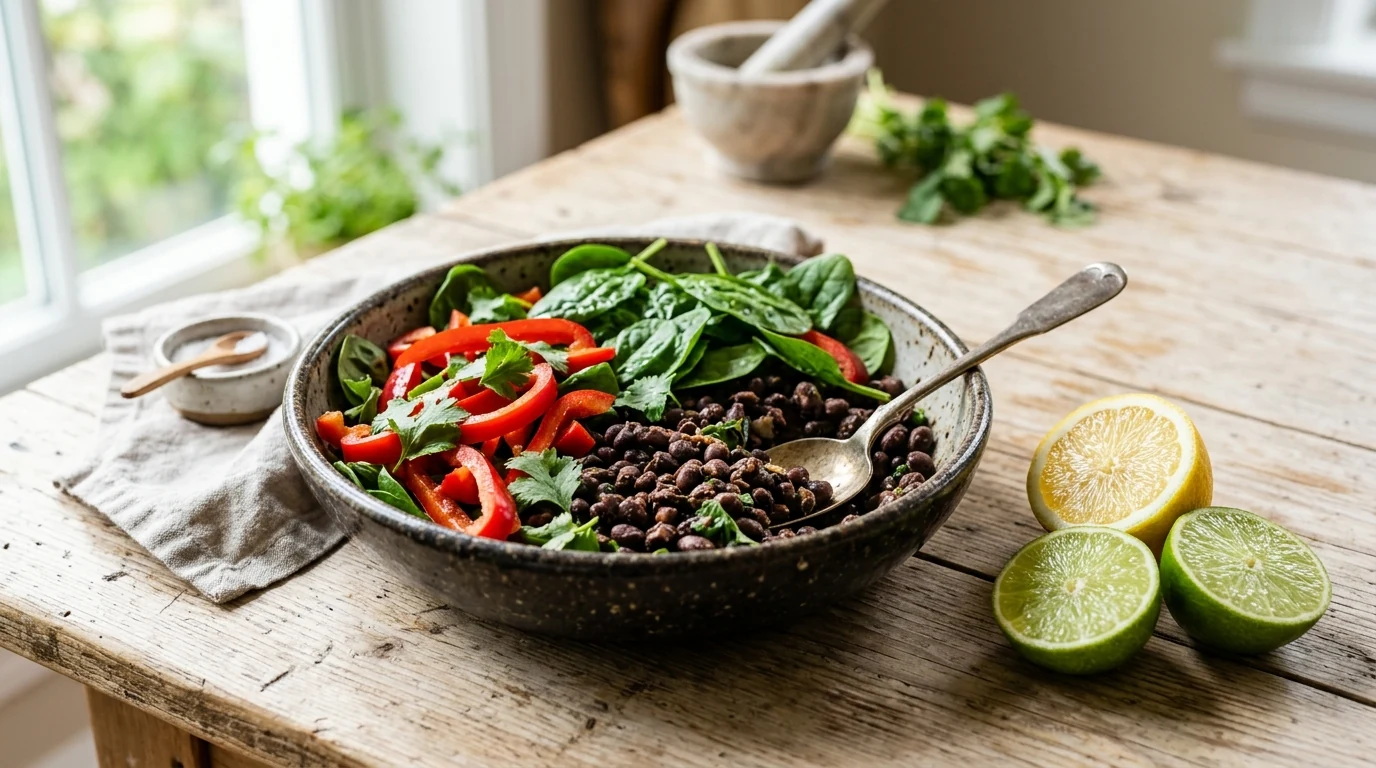
Lentil & Spinach Salad with Bell Pepper Lemon Dressing
Tofu & Broccoli Stir-Fry over Quinoa
Roasted Pumpkin Seeds & Dried Apricots
Categorized 100% WFPB Shopping List: Iron
Interactive grocery checklist organized by plant food category to hit your weekly Iron targets.
🛒 Fresh Produce
🛒 Legumes & Plant Proteins
🛒 Nuts, Seeds & Grains
🛒 Pantry Staples
Research & Evidence Intelligence Dashboard: Iron
Human clinical trial meta-analyses, publication trends, and consensus confidence grades for Iron.
10-Year Publication Trend: Iron (2015 – 2024)
Official Scientific Research Authorities: Iron
Verified data sources establishing international dietary standards and clinical recommendations for Iron.
USDA FoodData Central
VerifiedStandard Reference analytical database for 100% whole plant food micronutrient density.
NIH Office of Supplements
VerifiedNational Institutes of Health official DRI intake tables and deficiency research.
World Health Organization
VerifiedWHO/FAO expert consultation on human vitamin and mineral requirements.
NASEM Food & Nutrition
VerifiedNational Academies of Sciences evaluation of tolerable upper intake levels (UL).
Iron Knowledge Graph Explorer
Explore multi-dimensional entity connections linking Iron to plant food matrices, physiological functions, and health outcomes.
Frequently Asked Questions: Iron
Peer-reviewed answers to common questions regarding Iron bioavailability, absorption, and safety.
How does Vitamin C dramatically increase non-heme plant iron absorption?
Ascorbic acid reduces insoluble ferric iron (Fe³⁺) to soluble ferrous iron (Fe²⁺) in the stomach, while forming a chelate complex at low pH that prevents phytate inhibition, boosting absorption by up to 300%.
Do phytates in beans and whole grains prevent iron absorption?
While phytates bind minerals, traditional food preparation techniques like soaking, sprouting, fermenting, and cooking — combined with Vitamin C-rich foods — fully neutralize phytate inhibition.
Why is non-heme plant iron safer than heme iron from meat?
Non-heme iron absorption is tightly regulated by the liver hormone hepcidin based on body iron stores, protecting cells from toxic iron accumulation, whereas heme iron is absorbed uncontrollably.
Should vegans take routine iron supplements?
Not unless clinically diagnosed with iron deficiency. Whole plant foods provide abundant non-heme iron; unnecessary supplementation can cause oxidative gut irritation.
Peer-Reviewed Scientific References: Iron
Official clinical guidelines, NIH Dietary Reference Intakes, and peer-reviewed journal articles for Iron.