Zinc Evidence Guide
Essential trace mineral constituent of 1,000+ zinc finger transcription factors, driving DNA replication, wound healing, gustatory taste bud regeneration, and T-lymphocyte immune defense.
Quick Scientific Facts: Zinc
Key physiological targets, upper safety bounds, and bioavailability metrics.
Why Zinc Matters
Zinc Ion (Zn²⁺) • Essential Trace Mineral
Zinc is absorbed in the duodenum via Zip4 (SLC39A4) transporter channels and buffered by intestinal metallothionein.
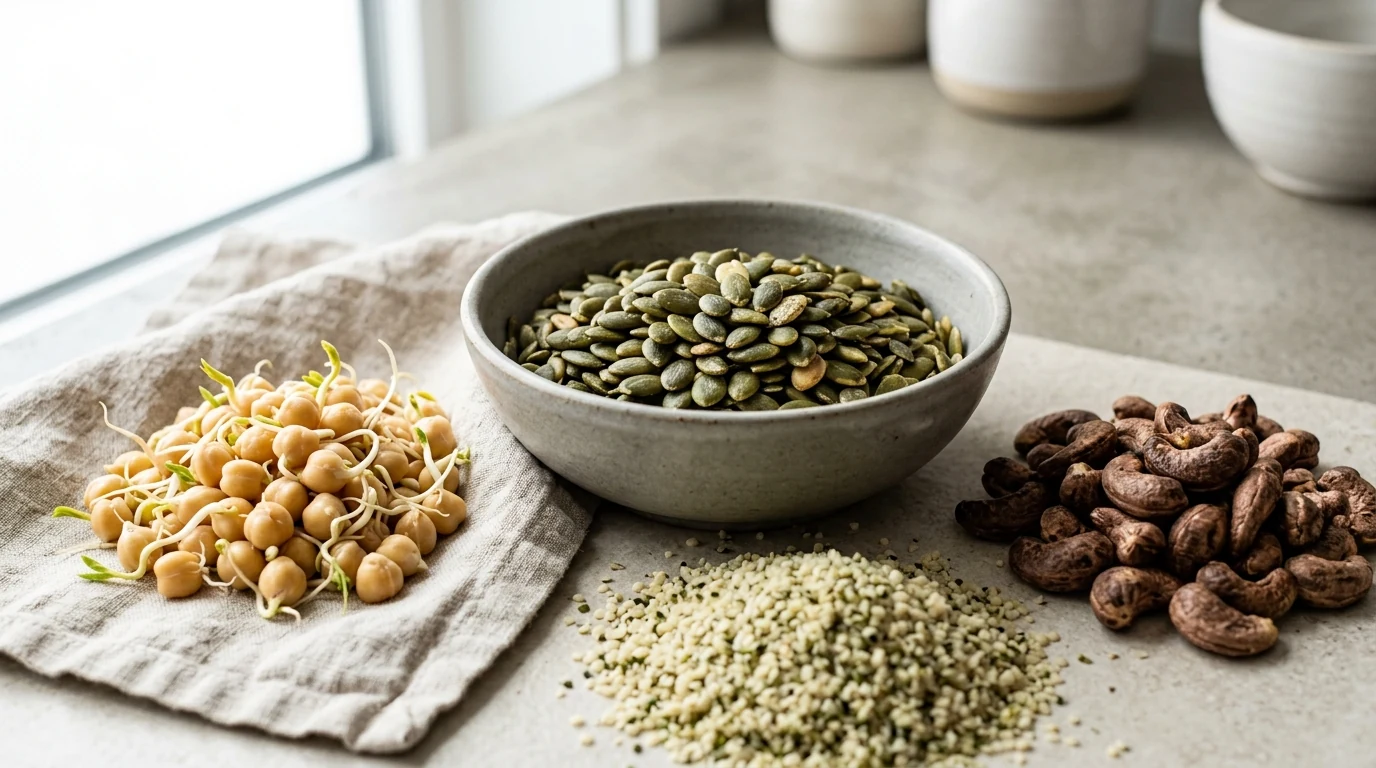
Soaking, sprouting, or fermenting pumpkin seeds, chickpeas, and lentils neutralizes phytate chelates, freeing Zn²⁺ ions for 3x higher absorption.
6-Stage Biological Journey: Zinc
Interactive pathway mapping Zinc ingestion, digestive release, membrane transport, and cellular bio-utilization.
Seed & Legume Matrix
Ingested from pumpkin seeds, hemp seeds, chickpeas, & tahini.
Oral Mastication & Salivary Solubilization
High Whole Food Retention
Gastric Pass-Through
Best 100% Whole Food Plant-Based Sources of Zinc
Top nutrient-dense plant foods ranked by % Daily Value per standard serving.
Raw Pumpkin Seeds →
Cooked Chickpeas →
Organic Hemp Seeds →
Lentils →
Sesame Tahini →
Cashews
Recommended Daily Allowance (RDA) & DRI Standards: Zinc
Dietary Reference Intakes (DRI) across human life stages established by the National Academies of Sciences.
| Life Stage Bracket | Requirement Target | Type | Upper Limit (UL) | Visual Scale |
|---|---|---|---|---|
| Pediatric / Children | Dietary Whole Foods | AI | 40 mg / day | |
| Adolescents (14–18 years) | Age-Appropriate Intake | AI | 40 mg / day | |
| Adult Male (19+ years) | 11 mg / day (Male) / 8 mg / day (Female) | AI | 40 mg / day | |
| Adult Female (19+ years) | 11 mg / day (Male) / 8 mg / day (Female) | AI | 40 mg / day | |
| Pregnancy (19+ years) | 11 mg / day (Male) / 8 mg / day (Female) | AI | 40 mg / day | |
| Lactation (19+ years) | 11 mg / day (Male) / 8 mg / day (Female) | AI | 40 mg / day | |
| Optimal Therapeutic Target | Enhanced Dietary Target | AI | 40 mg / day |
100% Daily Value Achievement Combinations: Zinc
Practical whole-food meal pairings to hit 100% of your daily Zinc requirement effortlessly.
1 Serving Raw Pumpkin Seeds
Prepared Raw / Light Toast for maximum retention.
1 Serving Cooked Chickpeas + Organic Hemp Seeds
Combined meal pairing for optimal Zinc density.
Organic Hemp Seeds + Lentils
Diverse whole-food combination across two meal windows.
5-Stage Deficiency Progression Timeline: Zinc
Clinical timeline tracing tissue depletion from early asymptomatic bio-depletion to overt pathology for Zinc. Educational deficiency progression model
Biochemical Biomarkers
- Thymulin hormone activity drops; T-lymphocyte proliferation declines.
Clinical Symptoms
- Impaired wound healing, skin lesions, brittle nails, and frequent colds.
100% WFPB Therapeutic Protocol
Optimize daily zinc to 15 mg via WFPB food matrices.
Interactive Toxicity & Tolerable Upper Intake Level (UL): Zinc
Drag the slider to evaluate biological safety margins, upper intake ceilings, and toxicity thresholds for Zinc.
8 – 11 mg / day
15 – 25 mg / day
40 mg / day
> 40 mg / day
✅ Optimal Bio-Physiological Baseline (100% RDA)
Consuming zinc from 100% whole plant foods has NO toxicity risk. High-dose synthetic supplements (>40mg) induce copper deficiency anemia.
Zinc Reference Calculator
Estimate your daily Zinc reference target using established Dietary Reference Intakes and relevant life-stage factors.
7-Day WFPB Meal Planner & Macro Balancer: Zinc
Scientifically calculated 100% plant-based meal plan optimized for Zinc density and bio-absorption.
Oatmeal Sprinkled with Hemp Seeds & Pumpkin Seeds
Sprouted Chickpea & Tahini Hummus Bowl
Lentil & Cashew Curry with Brown Rice
Handful of Toasted Pumpkin Seeds
Categorized 100% WFPB Shopping List: Zinc
Interactive grocery checklist organized by plant food category to hit your weekly Zinc targets.
🛒 Seeds & Nuts
🛒 Legumes & Grains
Research & Evidence Intelligence Dashboard: Zinc
Human clinical trial meta-analyses, publication trends, and consensus confidence grades for Zinc.
10-Year Publication Trend: Zinc (2015 – 2024)
Official Scientific Research Authorities: Zinc
Verified data sources establishing international dietary standards and clinical recommendations for Zinc.
USDA FoodData Central
VerifiedStandard Reference analytical database for 100% whole plant food micronutrient density.
NIH Office of Supplements
VerifiedNational Institutes of Health official DRI intake tables and deficiency research.
World Health Organization
VerifiedWHO/FAO expert consultation on human vitamin and mineral requirements.
NASEM Food & Nutrition
VerifiedNational Academies of Sciences evaluation of tolerable upper intake levels (UL).
Zinc Knowledge Graph Explorer
Explore multi-dimensional entity connections linking Zinc to plant food matrices, physiological functions, and health outcomes.
Frequently Asked Questions: Zinc
Peer-reviewed answers to common questions regarding Zinc bioavailability, absorption, and safety.
How does phytate neutralization increase plant zinc bioavailability?
Soaking, sprouting, or fermenting seeds and legumes activates plant phytase enzymes, breaking down phytic acid and releasing free Zn²⁺ for 3x higher Zip4 transporter uptake.
Can high-dose zinc supplements cause copper deficiency?
Yes. Supplemental zinc >40 mg/day induces enterocyte metallothionein synthesis, which preferentially binds copper and blocks copper absorption, leading to anemia.
Peer-Reviewed Scientific References: Zinc
Official clinical guidelines, NIH Dietary Reference Intakes, and peer-reviewed journal articles for Zinc.