Resveratrol Evidence Guide
Natural stilbenoid phytoalexin concentrated in red grape skins and berries that activates SIRT1 and AMPK enzymes, enhances endothelial nitric oxide, and stimulates mitochondrial biogenesis.
Quick Scientific Facts: Resveratrol
Key physiological targets, upper safety bounds, and bioavailability metrics.
Why Resveratrol Matters
3,5,4'-Trihydroxy-trans-stilbene • Natural Phytoalexin Polyphenol
Resveratrol is a natural stilbenoid phytoalexin synthesized by plants in response to pathogen stress. Clinically, trans-resveratrol acts as an allosteric activator of NAD+-dependent deacetylase Sirtuin-1 (SIRT1) and AMP-activated protein kinase (AMPK). This stimulates PGC-1alpha-driven mitochondrial biogenesis, enhances vascular endothelial nitric oxide synthase (eNOS) phosphorylation, improves arterial elasticity, and inhibits NF-kappaB inflammatory cascades.
Pairing resveratrol with quercetin (e.g. red grapes with red apples) inhibits intestinal sulfotransferases and increases circulating free resveratrol bioavailability by up to 300%.
6-Stage Biological Journey: Resveratrol
Interactive pathway mapping Resveratrol ingestion, digestive release, membrane transport, and cellular bio-utilization.
trans-Resveratrol Glucosides
Released from plant skins during mastication as trans-resveratrol and its glucoside piceid.
Oral Mastication & Salivary Solubilization
High Whole Food Retention
Gastric Pass-Through
Best 100% Whole Food Plant-Based Sources of Resveratrol
Top nutrient-dense plant foods ranked by % Daily Value per standard serving.
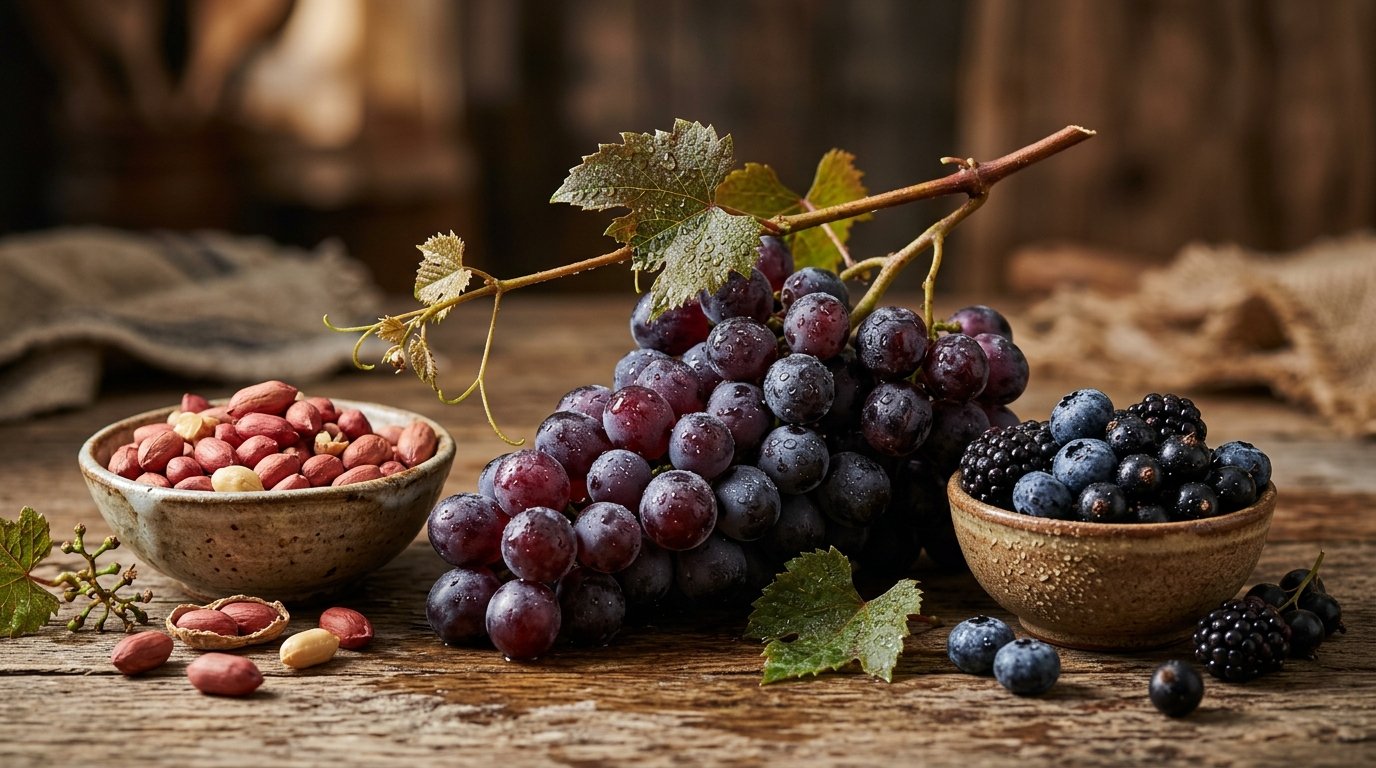
Red Grapes with Skins
Raw Spanish Peanuts
Fresh Blueberries →
Pure Dark Cacao (85%)
Fresh Blackberries
Red Currants
Recommended Daily Allowance (RDA) & DRI Standards: Resveratrol
Dietary Reference Intakes (DRI) across human life stages established by the National Academies of Sciences.
| Life Stage Bracket | Requirement Target | Type | Upper Limit (UL) | Visual Scale |
|---|---|---|---|---|
| Pediatric / Children | Dietary Whole Foods | AI | 1,000 mg / day (High supplemental doses >1g may cause mild GI distress) | |
| Adolescents (14–18 years) | Age-Appropriate Intake | AI | 1,000 mg / day (High supplemental doses >1g may cause mild GI distress) | |
| Adult Male (19+ years) | 50 – 250 mg / day (Evidence-Based Clinical Research Target) | AI | 1,000 mg / day (High supplemental doses >1g may cause mild GI distress) | |
| Adult Female (19+ years) | 50 – 250 mg / day (Evidence-Based Clinical Research Target) | AI | 1,000 mg / day (High supplemental doses >1g may cause mild GI distress) | |
| Pregnancy (19+ years) | 50 – 250 mg / day (Evidence-Based Clinical Research Target) | AI | 1,000 mg / day (High supplemental doses >1g may cause mild GI distress) | |
| Lactation (19+ years) | 50 – 250 mg / day (Evidence-Based Clinical Research Target) | AI | 1,000 mg / day (High supplemental doses >1g may cause mild GI distress) | |
| Optimal Therapeutic Target | Enhanced Dietary Target | AI | 1,000 mg / day (High supplemental doses >1g may cause mild GI distress) |
100% Daily Value Achievement Combinations: Resveratrol
Practical whole-food meal pairings to hit 100% of your daily Resveratrol requirement effortlessly.
1 Serving Red Grapes with Skins
Prepared Raw Fresh for maximum retention.
1 Serving Raw Spanish Peanuts + Fresh Blueberries
Combined meal pairing for optimal Resveratrol density.
Fresh Blueberries + Pure Dark Cacao (85%)
Diverse whole-food combination across two meal windows.
5-Stage Deficiency Progression Timeline: Resveratrol
Clinical timeline tracing tissue depletion from early asymptomatic bio-depletion to overt pathology for Resveratrol. Educational deficiency progression model
Biochemical Biomarkers
- Reduced SIRT1 deacetylase activity
- Subclinical decrease in mitochondrial density
- Increased vascular NF-kB activation
Clinical Symptoms
- Suboptimal arterial elasticity and stiffness
- Delayed metabolic recovery from high-fat meals
- Mild increase in vascular inflammatory tone
100% WFPB Therapeutic Protocol
Target 10–25mg natural stilbenoids from grapes, peanuts, and dark berries.
Interactive Toxicity & Tolerable Upper Intake Level (UL): Resveratrol
Drag the slider to evaluate biological safety margins, upper intake ceilings, and toxicity thresholds for Resveratrol.
10 – 100 mg / day (From dietary whole fruits, grapes, peanuts, and cacao)
100 – 500 mg / day (Clinical Longevity & Cardiovascular Trials)
1,000 mg / day (Supplemental trans-resveratrol)
> 2,000 mg / day (Isolated supplements may cause transient mild nausea or diarrhea)
✅ Optimal Bio-Physiological Baseline (100% RDA)
Dietary resveratrol from whole red grapes, berries, and raw cacao has zero toxicity.
Resveratrol Reference Calculator
Estimate your daily Resveratrol reference target using established Dietary Reference Intakes and relevant life-stage factors.
7-Day WFPB Meal Planner & Macro Balancer: Resveratrol
Scientifically calculated 100% plant-based meal plan optimized for Resveratrol density and bio-absorption.
Oatmeal Topped with Red Grapes, Wild Blueberries & Cacao Nibs
Spinach Salad with Sliced Red Grapes, Walnuts & Balsamic
Raw Peanuts with Skins & Dark Chocolate Cacao Pieces
Quinoa Bowl with Roasted Veggies & Fresh Berry Reduction
Categorized 100% WFPB Shopping List: Resveratrol
Interactive grocery checklist organized by plant food category to hit your weekly Resveratrol targets.
🛒 Resveratrol Fruits
🛒 Nuts & Cacao
Research & Evidence Intelligence Dashboard: Resveratrol
Human clinical trial meta-analyses, publication trends, and consensus confidence grades for Resveratrol.
No verified research data available
Clinical trials and meta-analyses for Resveratrol are currently being indexed.
Official Scientific Research Authorities: Resveratrol
Verified data sources establishing international dietary standards and clinical recommendations for Resveratrol.
USDA FoodData Central
VerifiedStandard Reference analytical database for 100% whole plant food micronutrient density.
NIH Office of Supplements
VerifiedNational Institutes of Health official DRI intake tables and deficiency research.
World Health Organization
VerifiedWHO/FAO expert consultation on human vitamin and mineral requirements.
NASEM Food & Nutrition
VerifiedNational Academies of Sciences evaluation of tolerable upper intake levels (UL).
Resveratrol Knowledge Graph Explorer
Explore multi-dimensional entity connections linking Resveratrol to plant food matrices, physiological functions, and health outcomes.
Frequently Asked Questions: Resveratrol
Peer-reviewed answers to common questions regarding Resveratrol bioavailability, absorption, and safety.
Is red wine the best source of resveratrol?
No. Fresh red grapes, blueberries, and raw peanuts provide whole-food resveratrol without the toxic, carcinogenic, and cardiovascular risks of alcohol.
How does resveratrol activate the SIRT1 longevity pathway?
Resveratrol directly binds allosterically to the SIRT1 enzyme, mimicking the life-extending and metabolic benefits of caloric restriction.
Can you get clinical amounts of resveratrol from food alone?
While supplements provide large isolated doses, whole fruits deliver a rich matrix of stilbenes, quercetin, and anthocyanins that act synergistically at much lower physiological doses.
Does cooking destroy resveratrol?
Resveratrol is relatively heat-stable, but raw fresh fruits with intact skins deliver the highest concentration of bioavailable trans-resveratrol.
How does resveratrol improve blood flow and circulation?
It stimulates endothelial nitric oxide synthase (eNOS) in blood vessel walls, causing smooth muscle relaxation and improved arterial vasodilation.
Peer-Reviewed Scientific References: Resveratrol
Official clinical guidelines, NIH Dietary Reference Intakes, and peer-reviewed journal articles for Resveratrol.