

Omega-6 Fatty Acids Evidence Guide
Essential polyunsaturated fatty acid (LA) vital for cutaneous barrier acylceramide synthesis, cell membrane structure, and balanced eicosanoid metabolism.
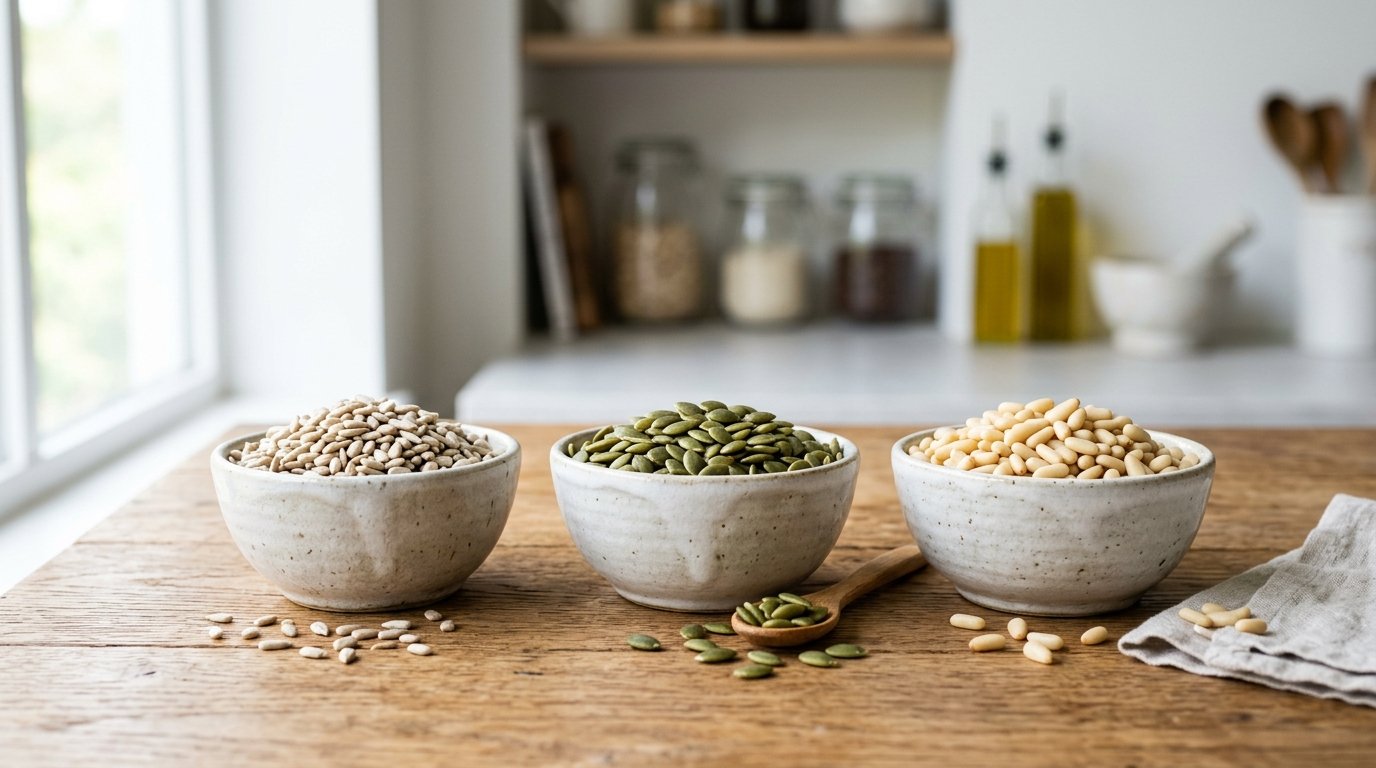
Quick Scientific Facts: Omega-6 Fatty Acids
Key physiological targets, upper safety bounds, and bioavailability metrics.
Why Omega-6 Fatty Acids Matters
Linoleic Acid (LA) • Essential Polyunsaturated Fatty Acid (18:2n-6)
Linoleic Acid (LA) is an essential omega-6 PUFA vital for synthesizing skin ceramides (acylceramides) that prevent trans-epidermal water loss. In whole plant matrices (sunflower seeds, pumpkin seeds, tahini, walnuts), linoleic acid is packaged with natural gamma-tocopherol and polyphenols, preventing lipid peroxidation and supporting healthy vascular lipid profiles.
Consuming whole-food plant sources of omega-6 (seeds, nuts, tahini) rather than refined industrial oils avoids excessive lipid oxidation and delivers natural antioxidant vitamin E.
6-Stage Biological Journey: Omega-6 Fatty Acids
Interactive pathway mapping Omega-6 Fatty Acids ingestion, digestive release, membrane transport, and cellular bio-utilization.
Whole Seed Matrix
Intact seeds and nuts release linoleic acid triglycerides alongside natural tocopherols.
Oral Mastication & Salivary Solubilization
High Whole Food Retention
Gastric Pass-Through
Best 100% Whole Food Plant-Based Sources of Omega-6 Fatty Acids
Top nutrient-dense plant foods ranked by % Daily Value per standard serving.
Raw Walnuts →
Sunflower Seeds
Whole Tahini (Sesame) →
Pumpkin Seeds (Pepitas) →
Raw Almonds →
Recommended Daily Allowance (RDA) & DRI Standards: Omega-6 Fatty Acids
Dietary Reference Intakes (DRI) across human life stages established by the National Academies of Sciences.
| Life Stage Bracket | Requirement Target | Type | Upper Limit (UL) | Visual Scale |
|---|---|---|---|---|
| Pediatric / Children | Dietary Whole Foods | AI | Not Established (Maintain balanced 4:1 to 2:1 Omega-6 to Omega-3 ratio) | |
| Adolescents (14–18 years) | Age-Appropriate Intake | AI | Not Established (Maintain balanced 4:1 to 2:1 Omega-6 to Omega-3 ratio) | |
| Adult Male (19+ years) | 14 g / day (Adult Men AI) / 11 g / day (Adult Women AI) | AI | Not Established (Maintain balanced 4:1 to 2:1 Omega-6 to Omega-3 ratio) | |
| Adult Female (19+ years) | 14 g / day (Adult Men AI) / 11 g / day (Adult Women AI) | AI | Not Established (Maintain balanced 4:1 to 2:1 Omega-6 to Omega-3 ratio) | |
| Pregnancy (19+ years) | 14 g / day (Adult Men AI) / 11 g / day (Adult Women AI) | AI | Not Established (Maintain balanced 4:1 to 2:1 Omega-6 to Omega-3 ratio) | |
| Lactation (19+ years) | 14 g / day (Adult Men AI) / 11 g / day (Adult Women AI) | AI | Not Established (Maintain balanced 4:1 to 2:1 Omega-6 to Omega-3 ratio) | |
| Optimal Therapeutic Target | Enhanced Dietary Target | AI | Not Established (Maintain balanced 4:1 to 2:1 Omega-6 to Omega-3 ratio) |
100% Daily Value Achievement Combinations: Omega-6 Fatty Acids
Practical whole-food meal pairings to hit 100% of your daily Omega-6 Fatty Acids requirement effortlessly.
1 Serving Raw Walnuts
Prepared Raw Halves for maximum retention.
1 Serving Sunflower Seeds + Whole Tahini (Sesame)
Combined meal pairing for optimal Omega-6 Fatty Acids density.
Whole Tahini (Sesame) + Pumpkin Seeds (Pepitas)
Diverse whole-food combination across two meal windows.
5-Stage Deficiency Progression Timeline: Omega-6 Fatty Acids
Clinical timeline tracing tissue depletion from early asymptomatic bio-depletion to overt pathology for Omega-6 Fatty Acids. Educational deficiency progression model
Biochemical Biomarkers
- Marked drop in skin ceramides
- Significant increase in TEWL rate
- Altered platelet membrane phospholipid profile
Clinical Symptoms
- Dry, scaly, itchy skin (xerosis)
- Follicular hyperkeratosis
- Brittle, lusterless hair and slow nail growth
100% WFPB Therapeutic Protocol
Daily intake of 2 tbsp tahini and 1 oz pumpkin seeds.
Interactive Toxicity & Tolerable Upper Intake Level (UL): Omega-6 Fatty Acids
Drag the slider to evaluate biological safety margins, upper intake ceilings, and toxicity thresholds for Omega-6 Fatty Acids.
11 – 17 g / day (Whole plant sources)
14 – 20 g / day (Healthy active adults)
Not Established for Whole Foods (Avoid refined seed oils)
> 30 g / day from refined industrial oils (Pro-inflammatory imbalance)
✅ Optimal Bio-Physiological Baseline (100% RDA)
Consuming omega-6 fats from whole seeds and nuts is completely safe and cardioprotective.
Omega-6 Fatty Acids Reference Calculator
Estimate your daily Omega-6 Fatty Acids reference target using established Dietary Reference Intakes and relevant life-stage factors.
7-Day WFPB Meal Planner & Macro Balancer: Omega-6 Fatty Acids
Scientifically calculated 100% plant-based meal plan optimized for Omega-6 Fatty Acids density and bio-absorption.
Oatmeal with Sliced Banana & 1 tbsp Raw Sunflower Seeds
Mediterranean Chickpea & Tomato Salad with Lemon-Tahini
Handful of Raw Walnuts with an Organic Apple
Brown Rice & Lentil Power Bowl with Toasted Pumpkin Seeds
Categorized 100% WFPB Shopping List: Omega-6 Fatty Acids
Interactive grocery checklist organized by plant food category to hit your weekly Omega-6 Fatty Acids targets.
🛒 Whole Seeds
🛒 Nuts & Spreads
Research & Evidence Intelligence Dashboard: Omega-6 Fatty Acids
Human clinical trial meta-analyses, publication trends, and consensus confidence grades for Omega-6 Fatty Acids.
No verified research data available
Clinical trials and meta-analyses for Omega-6 Fatty Acids are currently being indexed.
Official Scientific Research Authorities: Omega-6 Fatty Acids
Verified data sources establishing international dietary standards and clinical recommendations for Omega-6 Fatty Acids.
USDA FoodData Central
VerifiedStandard Reference analytical database for 100% whole plant food micronutrient density.
NIH Office of Supplements
VerifiedNational Institutes of Health official DRI intake tables and deficiency research.
World Health Organization
VerifiedWHO/FAO expert consultation on human vitamin and mineral requirements.
NASEM Food & Nutrition
VerifiedNational Academies of Sciences evaluation of tolerable upper intake levels (UL).
Omega-6 Fatty Acids Knowledge Graph Explorer
Explore multi-dimensional entity connections linking Omega-6 Fatty Acids to plant food matrices, physiological functions, and health outcomes.
Frequently Asked Questions: Omega-6 Fatty Acids
Peer-reviewed answers to common questions regarding Omega-6 Fatty Acids bioavailability, absorption, and safety.
Is omega-6 from whole plant foods inflammatory?
No. Major cardiometabolic clinical trials confirm that linoleic acid from whole nuts and seeds lowers LDL cholesterol and reduces cardiovascular events without promoting inflammation.
What is the best way to consume omega-6 fats?
Consume whole seeds and nuts (sunflower, pumpkin, walnuts, tahini) rather than extracted refined oils to obtain natural fiber, phytosterols, and protective vitamin E.
Does linoleic acid convert excessively into arachidonic acid?
No. In humans, the enzymatic conversion of dietary linoleic acid to arachidonic acid is tightly regulated at less than 1%.
How does omega-6 protect the skin?
Linoleic acid is the key building block for epidermal acylceramides, which seal the stratum corneum and maintain skin moisture.
Are sunflower seeds and tahini healthy on a whole-food plant diet?
Yes. They provide whole-food linoleic acid, zinc, magnesium, and plant phytosterols that support immune and cellular health.
Peer-Reviewed Scientific References: Omega-6 Fatty Acids
Official clinical guidelines, NIH Dietary Reference Intakes, and peer-reviewed journal articles for Omega-6 Fatty Acids.