

Omega-3 Fatty Acids Evidence Guide
Essential polyunsaturated fatty acid (ALA) and marine algal derivatives (EPA/DHA) required for cell membrane fluidity, anti-inflammatory eicosanoid balance, and cardiovascular endothelial protection.
Quick Scientific Facts: Omega-3 Fatty Acids
Key physiological targets, upper safety bounds, and bioavailability metrics.
Why Omega-3 Fatty Acids Matters
Alpha-Linolenic Acid (ALA) • Essential Polyunsaturated Fatty Acid (PUFA)
Alpha-Linolenic Acid (ALA, 18:3n-3) is the strictly essential parent omega-3 fatty acid. Hepatic and neural delta-6 and delta-5 desaturase enzymes elongate ALA into eicosapentaenoic acid (EPA) and docosahexaenoic acid (DHA). Omega-3 derivatives produce anti-inflammatory series-3 prostaglandins, series-5 leukotrienes, and specialized pro-resolving mediators (resolvins, protectins, maresins) that counter systemic vascular inflammation and stabilize cardiac rhythms.
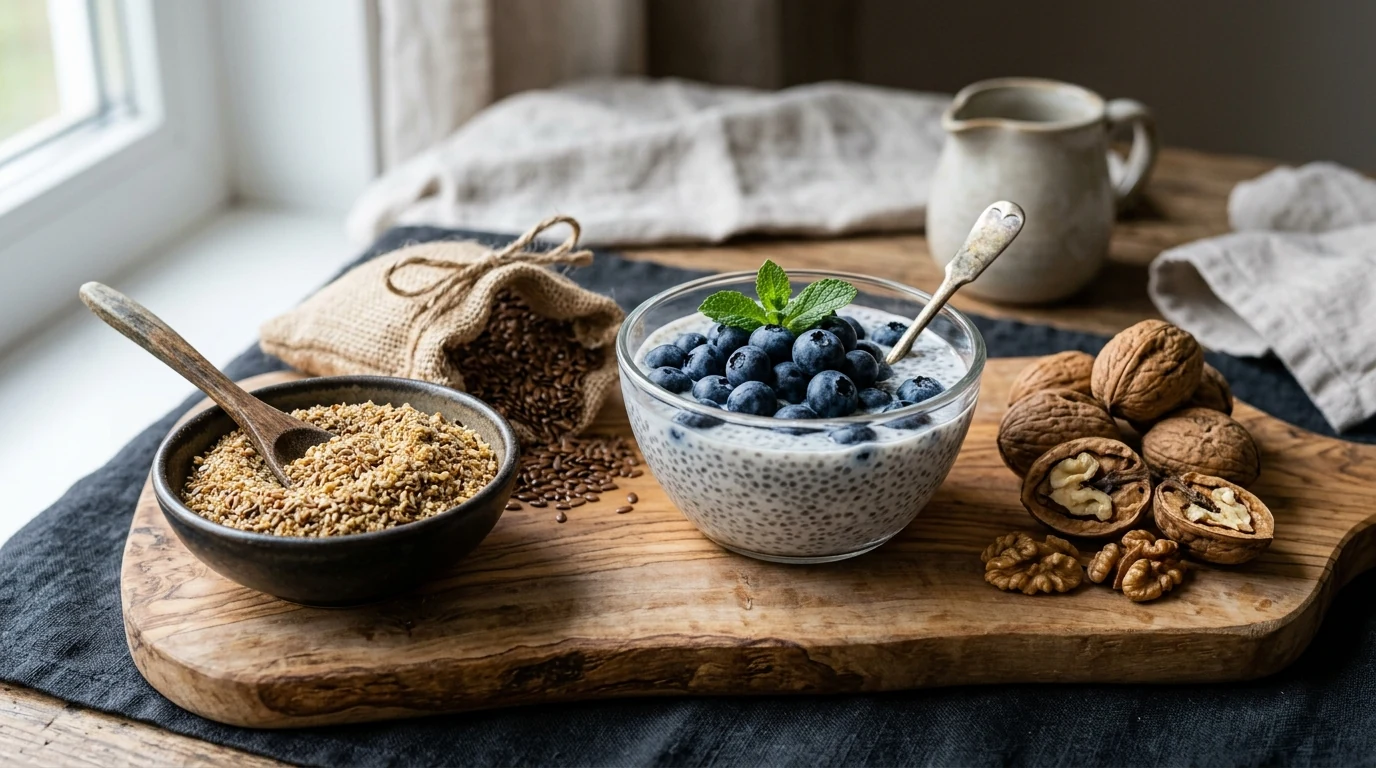
Consuming ground flaxseeds or chia seeds alongside low dietary saturated fat and moderate omega-6 intake enhances hepatic delta-6 desaturase conversion of ALA into EPA/DHA by up to 200%.
6-Stage Biological Journey: Omega-3 Fatty Acids
Interactive pathway mapping Omega-3 Fatty Acids ingestion, digestive release, membrane transport, and cellular bio-utilization.
Ground Seed Matrix
Ground flax, chia, and walnuts release hydrophobic ALA triglycerides during mastication.
Oral Mastication & Salivary Solubilization
High Whole Food Retention
Gastric Pass-Through
Best 100% Whole Food Plant-Based Sources of Omega-3 Fatty Acids
Top nutrient-dense plant foods ranked by % Daily Value per standard serving.
Ground Flaxseeds →
Raw Chia Seeds →
English Walnuts →
Hemp Seeds →
Algal Omega-3 Oil
Recommended Daily Allowance (RDA) & DRI Standards: Omega-3 Fatty Acids
Dietary Reference Intakes (DRI) across human life stages established by the National Academies of Sciences.
| Life Stage Bracket | Requirement Target | Type | Upper Limit (UL) | Visual Scale |
|---|---|---|---|---|
| Infants (0–12 months) | 0.5 g / day | AI | Not Established | |
| Children (1–8 years) | 0.7 – 0.9 g / day | AI | Not Established | |
| Adolescents (14–18 years) | 1.6 g (M) / 1.1 g (F) | AI | 3.0 g / day | |
| Adult Male (19+ years) | 1.6 g / day (ALA) | AI | 3.0 g / day | |
| Adult Female (19+ years) | 1.1 g / day (ALA) | AI | 3.0 g / day | |
| Pregnancy (19+ years) | 1.4 g / day (ALA) | AI | 3.0 g / day | |
| Lactation (19+ years) | 1.3 g / day (ALA) | AI | 3.0 g / day | |
| Algal EPA/DHA Add-On | +250 – 500 mg EPA/DHA | AI | 3.0 g / day |
100% Daily Value Achievement Combinations: Omega-3 Fatty Acids
Practical whole-food meal pairings to hit 100% of your daily Omega-3 Fatty Acids requirement effortlessly.
1 Serving Ground Flaxseeds
Prepared Raw Ground for maximum retention.
1 Serving Raw Chia Seeds + English Walnuts
Combined meal pairing for optimal Omega-3 Fatty Acids density.
English Walnuts + Hemp Seeds
Diverse whole-food combination across two meal windows.
5-Stage Deficiency Progression Timeline: Omega-3 Fatty Acids
Clinical timeline tracing tissue depletion from early asymptomatic bio-depletion to overt pathology for Omega-3 Fatty Acids. Educational deficiency progression model
Biochemical Biomarkers
- Erythrocyte omega-3 index falls into intermediate risk zone
- Elevated inflammatory eicosanoids (PGE2, LTB4)
- Reduced membrane fluidity in endothelial cells
Clinical Symptoms
- Noticeable dry skin (follicular keratosis)
- Chronic ocular dryness & irritation
- Joint stiffness & exercise-induced aches
100% WFPB Therapeutic Protocol
Daily protocol: 2 tbsp ground flaxseed, 1 oz walnuts, plus 300mg algal EPA/DHA.
Interactive Toxicity & Tolerable Upper Intake Level (UL): Omega-3 Fatty Acids
Drag the slider to evaluate biological safety margins, upper intake ceilings, and toxicity thresholds for Omega-3 Fatty Acids.
1.6 – 3.0 g / day (ALA from whole plant foods)
2.0 – 4.0 g / day (Cardiovascular & Anti-Inflammatory Focus)
3.0 g / day (Combined supplemental EPA/DHA)
> 5.0 g / day (Mildly prolonged bleeding time with high-dose oils)
✅ Optimal Bio-Physiological Baseline (100% RDA)
Whole plant food sources of ALA (flax, chia, walnuts) carry zero bleeding or toxicity risk.
Omega-3 Fatty Acids Reference Calculator
Estimate your daily Omega-3 Fatty Acids reference target using established Dietary Reference Intakes and relevant life-stage factors.
7-Day WFPB Meal Planner & Macro Balancer: Omega-3 Fatty Acids
Scientifically calculated 100% plant-based meal plan optimized for Omega-3 Fatty Acids density and bio-absorption.
Steel-Cut Oats with 2 tbsp Ground Flaxseeds & Blueberries
Massaged Kale Salad with Walnuts, Chickpeas & Lemon-Tahini
Chia Seed Vanilla Pudding with Sliced Strawberries
Steamed Broccoli, Quinoa & Tofu Bowl Sprinkled with Hemp
Categorized 100% WFPB Shopping List: Omega-3 Fatty Acids
Interactive grocery checklist organized by plant food category to hit your weekly Omega-3 Fatty Acids targets.
🛒 Omega-3 Rich Seeds
🛒 Nuts & Algal Oil
Research & Evidence Intelligence Dashboard: Omega-3 Fatty Acids
Human clinical trial meta-analyses, publication trends, and consensus confidence grades for Omega-3 Fatty Acids.
No verified research data available
Clinical trials and meta-analyses for Omega-3 Fatty Acids are currently being indexed.
Official Scientific Research Authorities: Omega-3 Fatty Acids
Verified data sources establishing international dietary standards and clinical recommendations for Omega-3 Fatty Acids.
USDA FoodData Central
VerifiedStandard Reference analytical database for 100% whole plant food micronutrient density.
NIH Office of Supplements
VerifiedNational Institutes of Health official DRI intake tables and deficiency research.
World Health Organization
VerifiedWHO/FAO expert consultation on human vitamin and mineral requirements.
NASEM Food & Nutrition
VerifiedNational Academies of Sciences evaluation of tolerable upper intake levels (UL).
Omega-3 Fatty Acids Knowledge Graph Explorer
Explore multi-dimensional entity connections linking Omega-3 Fatty Acids to plant food matrices, physiological functions, and health outcomes.
Frequently Asked Questions: Omega-3 Fatty Acids
Peer-reviewed answers to common questions regarding Omega-3 Fatty Acids bioavailability, absorption, and safety.
Can my body convert plant ALA into EPA and DHA?
Yes. The human liver converts ALA to EPA and DHA via delta-6 and delta-5 desaturase enzymes. While conversion rates vary, keeping dietary saturated fat and excess omega-6 low enhances conversion efficiency.
Should whole-food plant-based eaters take an algal EPA/DHA supplement?
While dietary ALA (from flax, chia, and walnuts) meets basic physiological needs, a modest algal EPA/DHA supplement (250–500 mg daily) ensures optimal brain and cardiovascular protection.
Why must flaxseeds be ground before consuming?
Flaxseeds have a tough outer cellulose hull that resists human digestive enzymes. Grinding flaxseeds releases the interior oils and alpha-linolenic acid for full intestinal absorption.
Do omega-3 fats get damaged by heat and cooking?
Yes. Polyunsaturated fatty acids are sensitive to high-heat oxidation. Add ground flaxseeds and chia seeds after cooking or enjoy them raw in smoothies and oatmeal.
What is the optimal dietary ratio of Omega-6 to Omega-3?
Health authorities recommend a dietary ratio between 2:1 and 4:1. Whole-food plant diets rich in flax, chia, and walnuts effortlessly maintain this healthy ratio.
Peer-Reviewed Scientific References: Omega-3 Fatty Acids
Official clinical guidelines, NIH Dietary Reference Intakes, and peer-reviewed journal articles for Omega-3 Fatty Acids.