Curcumin Evidence Guide
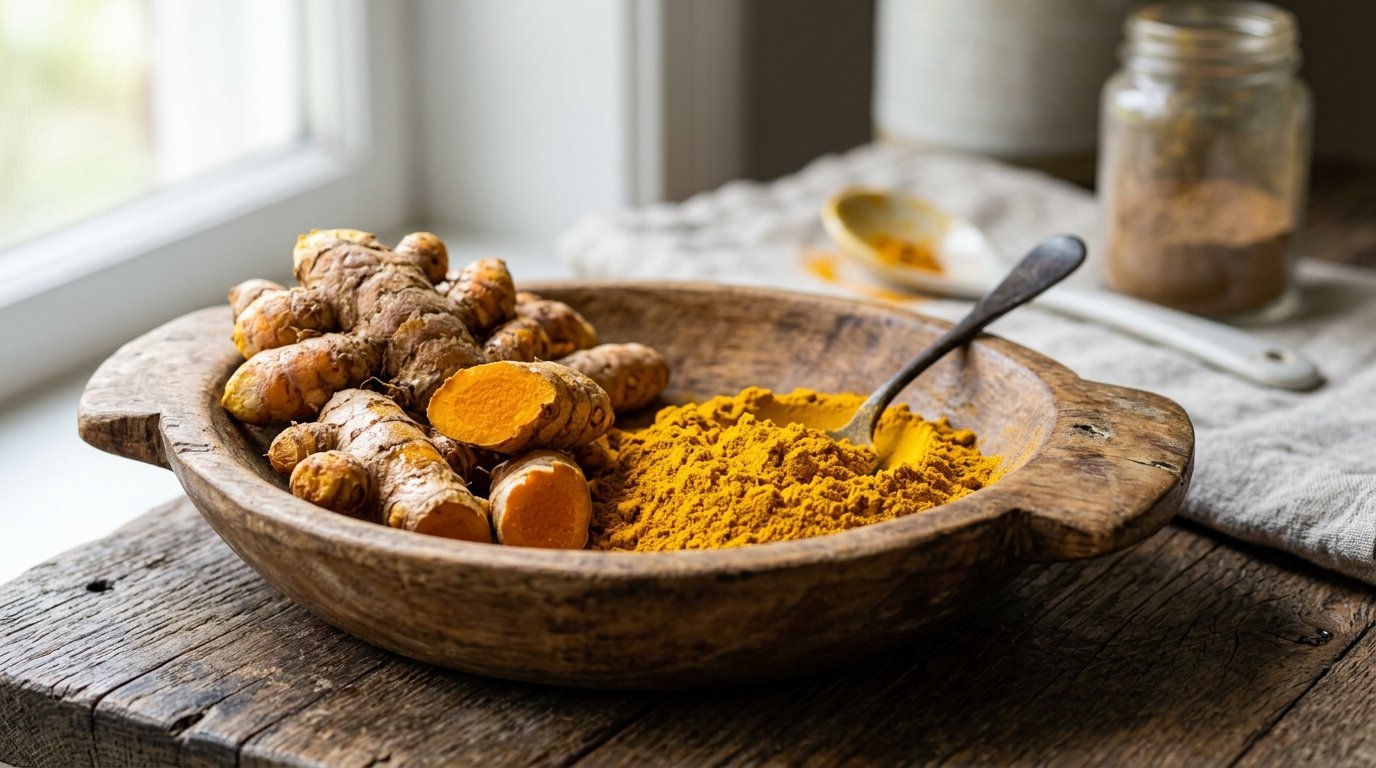
Principal bioactive hydrophobic polyphenol from turmeric rhizomes (Curcuma longa) that inhibits NF-kB nuclear translocation, down-regulates COX-2/iNOS enzymes, and activates Nrf2.
Quick Scientific Facts: Curcumin
Key physiological targets, upper safety bounds, and bioavailability metrics.
Why Curcumin Matters
Diferuloylmethane • Natural Lipophilic Polyphenolic Curcuminoid
Curcumin is the principal hydrophobic curcuminoid isolated from turmeric rhizomes (Curcuma longa). It exerts systemic anti-inflammatory effects by inhibiting IkappaB kinase (IKK) phosphorylation, thereby preventing the translocation of Nuclear Factor-kappa B (NF-kB) to the cell nucleus. This down-regulates pro-inflammatory cytokines (IL-1beta, IL-6, TNF-alpha), cyclooxygenase-2 (COX-2), and matrix metalloproteinases in articular cartilage.
Consuming curcumin alongside black pepper (piperine) enhances intestinal and hepatic bioavailability by up to 2,000% (20-fold) by inhibiting hepatic glucuronidation.
6-Stage Biological Journey: Curcumin
Interactive pathway mapping Curcumin ingestion, digestive release, membrane transport, and cellular bio-utilization.
Lipophilic Curcuminoid
Released from ground turmeric root matrix along with essential turmerones.
Oral Mastication & Salivary Solubilization
High Whole Food Retention
Gastric Pass-Through
Best 100% Whole Food Plant-Based Sources of Curcumin
Top nutrient-dense plant foods ranked by % Daily Value per standard serving.
Ground Turmeric Powder →
Fresh Turmeric Root →
Golden Turmeric Milk →
Turmeric Ginger Tea →
Turmeric Curry Sauce →
Recommended Daily Allowance (RDA) & DRI Standards: Curcumin
Dietary Reference Intakes (DRI) across human life stages established by the National Academies of Sciences.
| Life Stage Bracket | Requirement Target | Type | Upper Limit (UL) | Visual Scale |
|---|---|---|---|---|
| Pediatric / Children | Dietary Whole Foods | AI | 3,000 mg / day (Safe up to 8,000 mg/day in Phase I clinical trials) | |
| Adolescents (14–18 years) | Age-Appropriate Intake | AI | 3,000 mg / day (Safe up to 8,000 mg/day in Phase I clinical trials) | |
| Adult Male (19+ years) | 500 – 1,500 mg / day Curcuminoids (with Piperine for optimal uptake) | AI | 3,000 mg / day (Safe up to 8,000 mg/day in Phase I clinical trials) | |
| Adult Female (19+ years) | 500 – 1,500 mg / day Curcuminoids (with Piperine for optimal uptake) | AI | 3,000 mg / day (Safe up to 8,000 mg/day in Phase I clinical trials) | |
| Pregnancy (19+ years) | 500 – 1,500 mg / day Curcuminoids (with Piperine for optimal uptake) | AI | 3,000 mg / day (Safe up to 8,000 mg/day in Phase I clinical trials) | |
| Lactation (19+ years) | 500 – 1,500 mg / day Curcuminoids (with Piperine for optimal uptake) | AI | 3,000 mg / day (Safe up to 8,000 mg/day in Phase I clinical trials) | |
| Optimal Therapeutic Target | Enhanced Dietary Target | AI | 3,000 mg / day (Safe up to 8,000 mg/day in Phase I clinical trials) |
100% Daily Value Achievement Combinations: Curcumin
Practical whole-food meal pairings to hit 100% of your daily Curcumin requirement effortlessly.
1 Serving Ground Turmeric Powder
Prepared Simmered in Food for maximum retention.
1 Serving Fresh Turmeric Root + Golden Turmeric Milk
Combined meal pairing for optimal Curcumin density.
Golden Turmeric Milk + Turmeric Ginger Tea
Diverse whole-food combination across two meal windows.
5-Stage Deficiency Progression Timeline: Curcumin
Clinical timeline tracing tissue depletion from early asymptomatic bio-depletion to overt pathology for Curcumin. Educational deficiency progression model
Biochemical Biomarkers
- Uninhibited NF-kB baseline transcription
- Elevated circulating TNF-alpha & IL-1beta
- Elevated synovial matrix metalloproteinases (MMPs)
Clinical Symptoms
- Persistent joint aches and exercise-induced soreness
- Delayed muscular recovery from workouts
- Mild systemic inflammatory symptoms
100% WFPB Therapeutic Protocol
Target 500mg curcuminoids daily with black pepper and plant fats.
Interactive Toxicity & Tolerable Upper Intake Level (UL): Curcumin
Drag the slider to evaluate biological safety margins, upper intake ceilings, and toxicity thresholds for Curcumin.
300 – 1,000 mg / day (From turmeric powder, golden milk, and curries)
1,000 – 2,000 mg / day (Targeted Joint & Synovial Anti-Inflammatory Protocols)
3,000 mg / day (Standardized Curcuminoid Extract)
> 8,000 mg / day (Very high supplemental doses may cause mild transient diarrhea)
✅ Optimal Bio-Physiological Baseline (100% RDA)
Culinary turmeric used in cooking with black pepper is exceptionally safe and consumed daily by millions worldwide.
Curcumin Reference Calculator
Estimate your daily Curcumin reference target using established Dietary Reference Intakes and relevant life-stage factors.
7-Day WFPB Meal Planner & Macro Balancer: Curcumin
Scientifically calculated 100% plant-based meal plan optimized for Curcumin density and bio-absorption.
Golden Turmeric Tofu Scramble with Spinach & Black Pepper
Yellow Lentil Dal Simmered with Turmeric, Ginger & Cumin
Warm Turmeric Ginger Tea with Fresh Lemon & Black Pepper
Chickpea & Sweet Potato Turmeric Curry over Brown Basmati
Categorized 100% WFPB Shopping List: Curcumin
Interactive grocery checklist organized by plant food category to hit your weekly Curcumin targets.
🛒 Turmeric & Spices
🛒 Cooking Staples
Research & Evidence Intelligence Dashboard: Curcumin
Human clinical trial meta-analyses, publication trends, and consensus confidence grades for Curcumin.
No verified research data available
Clinical trials and meta-analyses for Curcumin are currently being indexed.
Official Scientific Research Authorities: Curcumin
Verified data sources establishing international dietary standards and clinical recommendations for Curcumin.
USDA FoodData Central
VerifiedStandard Reference analytical database for 100% whole plant food micronutrient density.
NIH Office of Supplements
VerifiedNational Institutes of Health official DRI intake tables and deficiency research.
World Health Organization
VerifiedWHO/FAO expert consultation on human vitamin and mineral requirements.
NASEM Food & Nutrition
VerifiedNational Academies of Sciences evaluation of tolerable upper intake levels (UL).
Curcumin Knowledge Graph Explorer
Explore multi-dimensional entity connections linking Curcumin to plant food matrices, physiological functions, and health outcomes.
Frequently Asked Questions: Curcumin
Peer-reviewed answers to common questions regarding Curcumin bioavailability, absorption, and safety.
Why must turmeric always be eaten with black pepper?
Black pepper contains piperine, which inhibits hepatic and intestinal glucuronidation, increasing curcumin absorption into the bloodstream by up to 2,000% (20-fold).
Is fresh turmeric root better than dried turmeric powder?
Both are effective. Fresh root contains aromatic turmerone oils that aid absorption, while dried powder is more concentrated in curcuminoids.
How does curcumin compare to over-the-counter NSAIDs for joint pain?
Multiple randomized clinical trials show that 1,000 to 1,500 mg of curcuminoids daily performs comparably to ibuprofen for osteoarthritis pain, without causing gastric ulcers.
Should turmeric be cooked in fat to absorb properly?
Yes. Curcumin is hydrophobic (fat-soluble). Cooking turmeric with healthy whole plant fats (olive, coconut, tahini, or nuts) enhances micellar absorption.
Can high doses of turmeric cause kidney stones?
Turmeric contains moderate oxalates. People with a history of calcium oxalate kidney stones should consume moderate culinary amounts rather than excessive pure powder.
Peer-Reviewed Scientific References: Curcumin
Official clinical guidelines, NIH Dietary Reference Intakes, and peer-reviewed journal articles for Curcumin.