Coenzyme Q10 Evidence Guide
Essential lipid-soluble benzoquinone electron carrier in the mitochondrial respiratory chain required for ATP synthesis, membrane antioxidant protection, and myocardial bioenergetics.
Quick Scientific Facts: Coenzyme Q10
Key physiological targets, upper safety bounds, and bioavailability metrics.
Why Coenzyme Q10 Matters
Ubiquinone-10 / Ubiquinol • Mitochondrial Lipid-Soluble Electron Carrier
Coenzyme Q10 (Ubiquinone) is an essential component of the mitochondrial inner membrane respiratory chain, transferring electrons from Complexes I and II to Complex III during oxidative phosphorylation to generate ATP. In its reduced form (Ubiquinol), it serves as a primary lipid-soluble antioxidant that protects mitochondrial DNA, cardiac myocytes, and circulating LDL particles from oxidative damage.
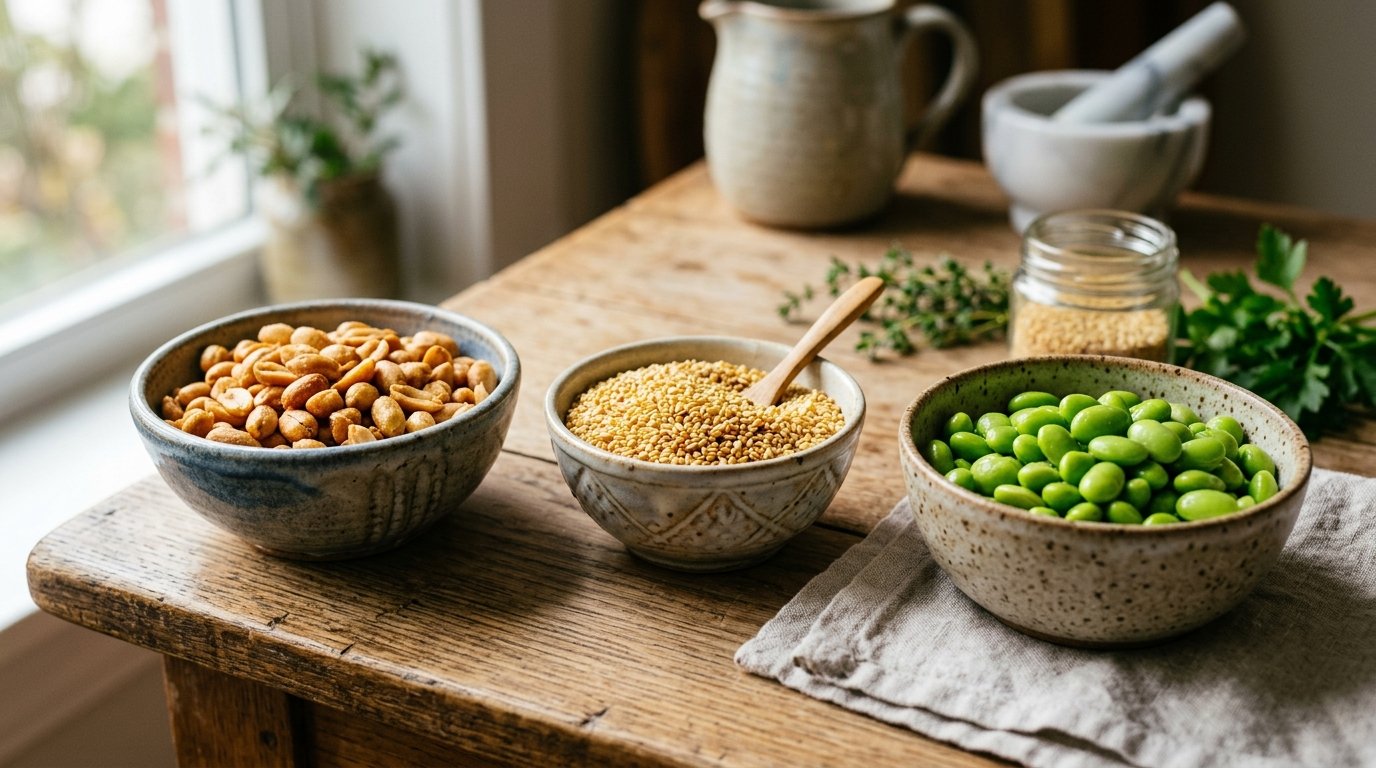
Consuming plant CoQ10 alongside healthy fats (avocado, tahini, nuts) enhances intestinal micellization and enterocyte absorption by up to 300%.
6-Stage Biological Journey: Coenzyme Q10
Interactive pathway mapping Coenzyme Q10 ingestion, digestive release, membrane transport, and cellular bio-utilization.
Lipophilic Benzoquinone
Released from plant lipid matrices during mastication and gastric churning.
Oral Mastication & Salivary Solubilization
High Whole Food Retention
Gastric Pass-Through
Best 100% Whole Food Plant-Based Sources of Coenzyme Q10
Top nutrient-dense plant foods ranked by % Daily Value per standard serving.
Raw Roasted Peanuts
Whole Sesame Seeds →
Raw Pistachios
Cooked Broccoli →
Cooked Cauliflower →
Fresh Hass Avocado →
Recommended Daily Allowance (RDA) & DRI Standards: Coenzyme Q10
Dietary Reference Intakes (DRI) across human life stages established by the National Academies of Sciences.
| Life Stage Bracket | Requirement Target | Type | Upper Limit (UL) | Visual Scale |
|---|---|---|---|---|
| Pediatric / Children | Dietary Whole Foods | AI | 1,200 mg / day (Well tolerated in multi-center clinical trials) | |
| Adolescents (14–18 years) | Age-Appropriate Intake | AI | 1,200 mg / day (Well tolerated in multi-center clinical trials) | |
| Adult Male (19+ years) | 100 – 200 mg / day (Clinical Bioenergetic & Cardiovascular Target) | AI | 1,200 mg / day (Well tolerated in multi-center clinical trials) | |
| Adult Female (19+ years) | 100 – 200 mg / day (Clinical Bioenergetic & Cardiovascular Target) | AI | 1,200 mg / day (Well tolerated in multi-center clinical trials) | |
| Pregnancy (19+ years) | 100 – 200 mg / day (Clinical Bioenergetic & Cardiovascular Target) | AI | 1,200 mg / day (Well tolerated in multi-center clinical trials) | |
| Lactation (19+ years) | 100 – 200 mg / day (Clinical Bioenergetic & Cardiovascular Target) | AI | 1,200 mg / day (Well tolerated in multi-center clinical trials) | |
| Optimal Therapeutic Target | Enhanced Dietary Target | AI | 1,200 mg / day (Well tolerated in multi-center clinical trials) |
100% Daily Value Achievement Combinations: Coenzyme Q10
Practical whole-food meal pairings to hit 100% of your daily Coenzyme Q10 requirement effortlessly.
1 Serving Raw Roasted Peanuts
Prepared Lightly Roasted for maximum retention.
1 Serving Whole Sesame Seeds + Raw Pistachios
Combined meal pairing for optimal Coenzyme Q10 density.
Raw Pistachios + Cooked Broccoli
Diverse whole-food combination across two meal windows.
5-Stage Deficiency Progression Timeline: Coenzyme Q10
Clinical timeline tracing tissue depletion from early asymptomatic bio-depletion to overt pathology for Coenzyme Q10. Educational deficiency progression model
Biochemical Biomarkers
- Plasma CoQ10 drops < 0.5 ug/mL
- Reduced myocardial ATP generation capacity
- Elevated markers of cardiac oxidative stress
Clinical Symptoms
- Exercise intolerance and muscular heaviness
- Mild decline in cardiac ejection fraction reserve
- Elevated fatigue during routine physical tasks
100% WFPB Therapeutic Protocol
Target 100–200mg daily CoQ10 support alongside whole-food nutrition.
Interactive Toxicity & Tolerable Upper Intake Level (UL): Coenzyme Q10
Drag the slider to evaluate biological safety margins, upper intake ceilings, and toxicity thresholds for Coenzyme Q10.
50 – 200 mg / day (From dietary whole foods and cellular synthesis)
200 – 400 mg / day (Cardiovascular & Statin Myopathy Support)
1,200 mg / day (Supplemental Ubiquinone/Ubiquinol)
> 1,800 mg / day (Very high doses may cause mild insomnia or GI discomfort)
✅ Optimal Bio-Physiological Baseline (100% RDA)
Coenzyme Q10 from whole foods and physiological supplements is exceptionally well-tolerated with zero organ toxicity.
Coenzyme Q10 Reference Calculator
Estimate your daily Coenzyme Q10 reference target using established Dietary Reference Intakes and relevant life-stage factors.
7-Day WFPB Meal Planner & Macro Balancer: Coenzyme Q10
Scientifically calculated 100% plant-based meal plan optimized for Coenzyme Q10 density and bio-absorption.
Oatmeal with 2 tbsp Tahini, Banana Slices & Hemp Seeds
Steamed Broccoli & Cauliflower Grain Bowl with Peanut Sauce
Handful of Roasted Peanuts & Pistachios
Stir-Fried Tofu with Sesame Seeds, Garlic & Brown Rice
Categorized 100% WFPB Shopping List: Coenzyme Q10
Interactive grocery checklist organized by plant food category to hit your weekly Coenzyme Q10 targets.
🛒 CoQ10 Rich Nuts/Seeds
🛒 Fresh Vegetables
Research & Evidence Intelligence Dashboard: Coenzyme Q10
Human clinical trial meta-analyses, publication trends, and consensus confidence grades for Coenzyme Q10.
No verified research data available
Clinical trials and meta-analyses for Coenzyme Q10 are currently being indexed.
Official Scientific Research Authorities: Coenzyme Q10
Verified data sources establishing international dietary standards and clinical recommendations for Coenzyme Q10.
USDA FoodData Central
VerifiedStandard Reference analytical database for 100% whole plant food micronutrient density.
NIH Office of Supplements
VerifiedNational Institutes of Health official DRI intake tables and deficiency research.
World Health Organization
VerifiedWHO/FAO expert consultation on human vitamin and mineral requirements.
NASEM Food & Nutrition
VerifiedNational Academies of Sciences evaluation of tolerable upper intake levels (UL).
Coenzyme Q10 Knowledge Graph Explorer
Explore multi-dimensional entity connections linking Coenzyme Q10 to plant food matrices, physiological functions, and health outcomes.
Frequently Asked Questions: Coenzyme Q10
Peer-reviewed answers to common questions regarding Coenzyme Q10 bioavailability, absorption, and safety.
Does the body make its own CoQ10?
Yes. Human cells synthesize CoQ10 internally through the mevalonate pathway. However, endogenous production declines steadily after age 20–30.
Why do statin medications deplete CoQ10?
Statins inhibit HMG-CoA reductase, the enzyme that produces both cholesterol and the mevalonate precursors necessary for CoQ10 synthesis.
What is the difference between Ubiquinone and Ubiquinol?
Ubiquinone is the oxidized electron-acceptor form, while Ubiquinol is the reduced antioxidant form. The body interconverts between them seamlessly.
Can you get CoQ10 on a 100% plant-based diet?
Yes. Peanuts, sesame seeds, pistachios, broccoli, and avocados provide natural dietary CoQ10 while supplying nutrients needed for endogenous synthesis.
How does CoQ10 support heart function?
The heart muscle requires enormous continuous ATP energy. CoQ10 optimizes mitochondrial respiratory chain efficiency in cardiac myocytes.
Peer-Reviewed Scientific References: Coenzyme Q10
Official clinical guidelines, NIH Dietary Reference Intakes, and peer-reviewed journal articles for Coenzyme Q10.